
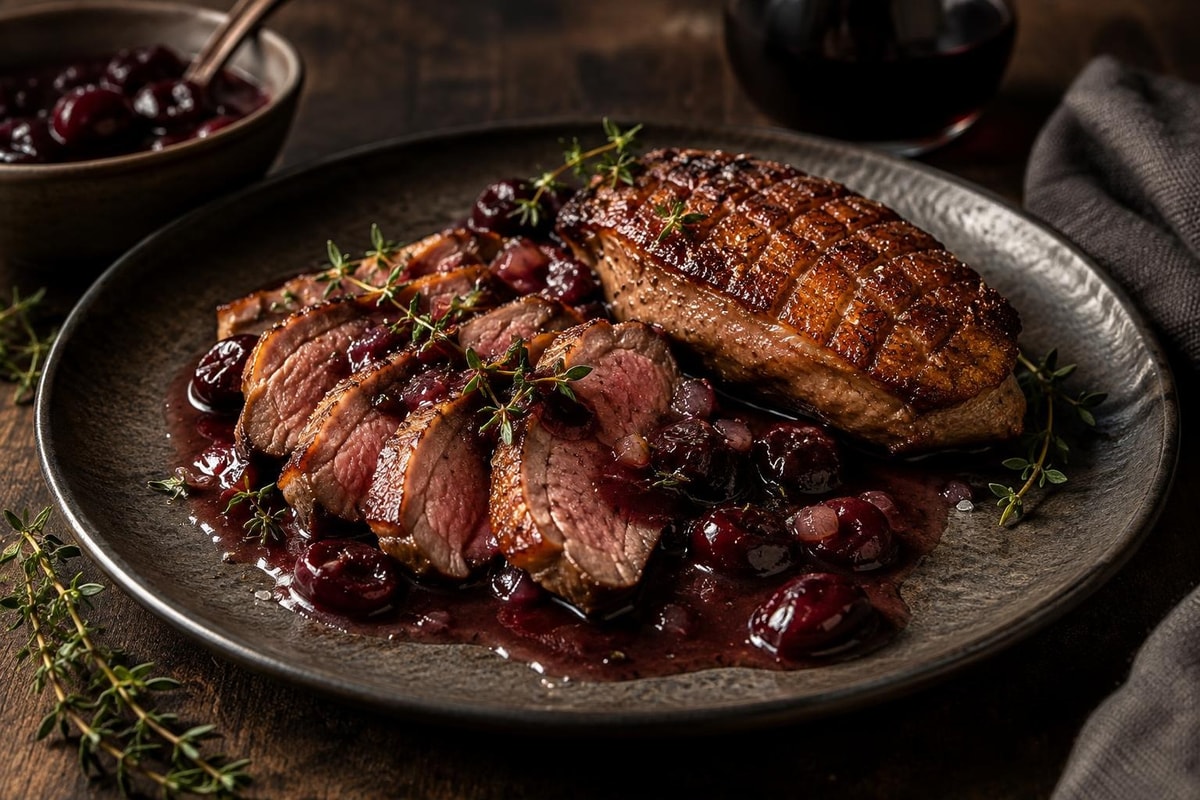

Pan-seared duck breasts with crisp, caramelized skin served with a glossy cherry–port reduction that’s sweet, tangy, and finished with butter for silkiness.
Source: Copper Ladle Studio. Open recipe on the source website
Crisp-Skinned Duck with Cherry–Port Glaze
A weeknight-friendly way to get restaurant polish at home: crackling duck skin and a glossy cherry–port reduction that’s sweet, tangy, and finished with butter for luxe silkiness.
This recipe answers the urge for something special without sending you to a fancy restaurant. Crisp skin and rosy meat give the duck a satisfying contrast of textures, while the cherry–port sauce brings bright fruitiness and a little boozy depth. It’s the kind of dinner that feels elevated but is straightforward enough for a midweek celebration.
The trick is slow, patient rendering: score the skin, pat it dry, and start the breasts skin-side down in a cold, heavy skillet so the fat melts out and the skin caramelizes evenly. Press occasionally so the skin lays flat; after 8–12 minutes you’ll have deeply golden, crackling skin. A quick sear on the meat side and a short oven finish bring each breast to a perfect medium-rare before you let them rest.
While the duck rests, make the sauce right in the pan—wipe out excess fat but leave a tablespoon for flavor, sauté shallot, garlic and thyme, add cherries, ruby port, a splash of stock and a touch of red wine vinegar and honey. Reduce until syrupy, then swirl in cold butter off the heat for a glossy, silky finish that clings to the sliced duck.
This cooks up in under an hour and serves four; the sauce can be made ahead and gently reheated, which makes weeknight plating faster. Serve with creamy polenta, roasted root vegetables, or a peppery salad to cut through the richness. Tip: an instant-read thermometer is your friend—135°F (57°C) yields a tender, slightly pink center.
Ingredients
How to make Seared Seared Duck Breast Cherry Port Sauce
- Bring duck breasts to room temperature (20 minutes). Pat skin dry, then score the skin in a diamond pattern with a sharp knife without cutting into the meat; season both sides with kosher salt and freshly ground black pepper.
- Place a large heavy skillet (cast-iron preferred) over medium-low heat and add the duck breasts skin-side down without oil; cook gently 8–12 minutes to render fat and crisp the skin, pressing occasionally so the skin lays flat.
- When the skin is deeply golden and most fat is rendered, flip the breasts and sear the flesh side 1–2 minutes, then transfer the skillet to a 400°F (200°C) oven for 6–8 minutes for medium-rare (internal ~135°F/57°C); remove to a cutting board and tent loosely to rest.
- While the duck finishes, drain rendered fat from the skillet leaving about 1 tablespoon; return skillet to medium heat, add 1 tablespoon olive oil if needed and sauté finely chopped shallot and minced garlic with 2 thyme sprigs until translucent, about 2 minutes.
- Add pitted cherries and honey and cook 1–2 minutes, then pour in the ruby port to deglaze, scraping browned bits; bring to a simmer and reduce by about half (4–6 minutes) to concentrate flavor.
- Stir in chicken stock and remaining thyme, simmer until the sauce coats the back of a spoon (another 4–6 minutes); remove from heat and whisk in cold unsalted butter 1 tablespoon at a time to finish the sauce, then taste and add red wine vinegar to balance.
- Slice duck breasts thinly against the grain and arrange on warmed plates; spoon the cherry-port sauce over and around the slices, and garnish each plate with a small thyme sprig.
- Optional: skim excess fat from any remaining sauce before finishing for a leaner sauce, or strain the sauce for a smoother finish if desired.
Recipe card
Seared Seared Duck Breast Cherry Port Sauce
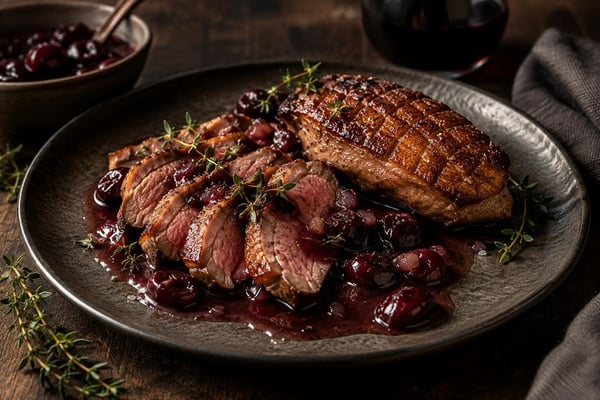
Pan-seared duck breasts with crisp, caramelized skin served with a glossy cherry–port reduction that’s sweet, tangy, and finished with butter for silkiness.
- Prep
- 20 min
- Cook
- 25 min
- Servings
- 4
Ingredients
Instructions
- Bring duck breasts to room temperature (20 minutes). Pat skin dry, then score the skin in a diamond pattern with a sharp knife without cutting into the meat; season both sides with kosher salt and freshly ground black pepper.
- Place a large heavy skillet (cast-iron preferred) over medium-low heat and add the duck breasts skin-side down without oil; cook gently 8–12 minutes to render fat and crisp the skin, pressing occasionally so the skin lays flat.
- When the skin is deeply golden and most fat is rendered, flip the breasts and sear the flesh side 1–2 minutes, then transfer the skillet to a 400°F (200°C) oven for 6–8 minutes for medium-rare (internal ~135°F/57°C); remove to a cutting board and tent loosely to rest.
- While the duck finishes, drain rendered fat from the skillet leaving about 1 tablespoon; return skillet to medium heat, add 1 tablespoon olive oil if needed and sauté finely chopped shallot and minced garlic with 2 thyme sprigs until translucent, about 2 minutes.
- Add pitted cherries and honey and cook 1–2 minutes, then pour in the ruby port to deglaze, scraping browned bits; bring to a simmer and reduce by about half (4–6 minutes) to concentrate flavor.
- Stir in chicken stock and remaining thyme, simmer until the sauce coats the back of a spoon (another 4–6 minutes); remove from heat and whisk in cold unsalted butter 1 tablespoon at a time to finish the sauce, then taste and add red wine vinegar to balance.
- Slice duck breasts thinly against the grain and arrange on warmed plates; spoon the cherry-port sauce over and around the slices, and garnish each plate with a small thyme sprig.
- Optional: skim excess fat from any remaining sauce before finishing for a leaner sauce, or strain the sauce for a smoother finish if desired.
Nutrition
- Carbohydrates
- 28
- Saturated Fat
- 13
- Sodium
- 480
- Fiber
- 2
- Unsaturated Fat
- 29
- Protein
- 30
- Fat
- 42
- Cholesterol
- 120
- Trans Fat
- 0
- Calories
- 620
- Sugar
- 20